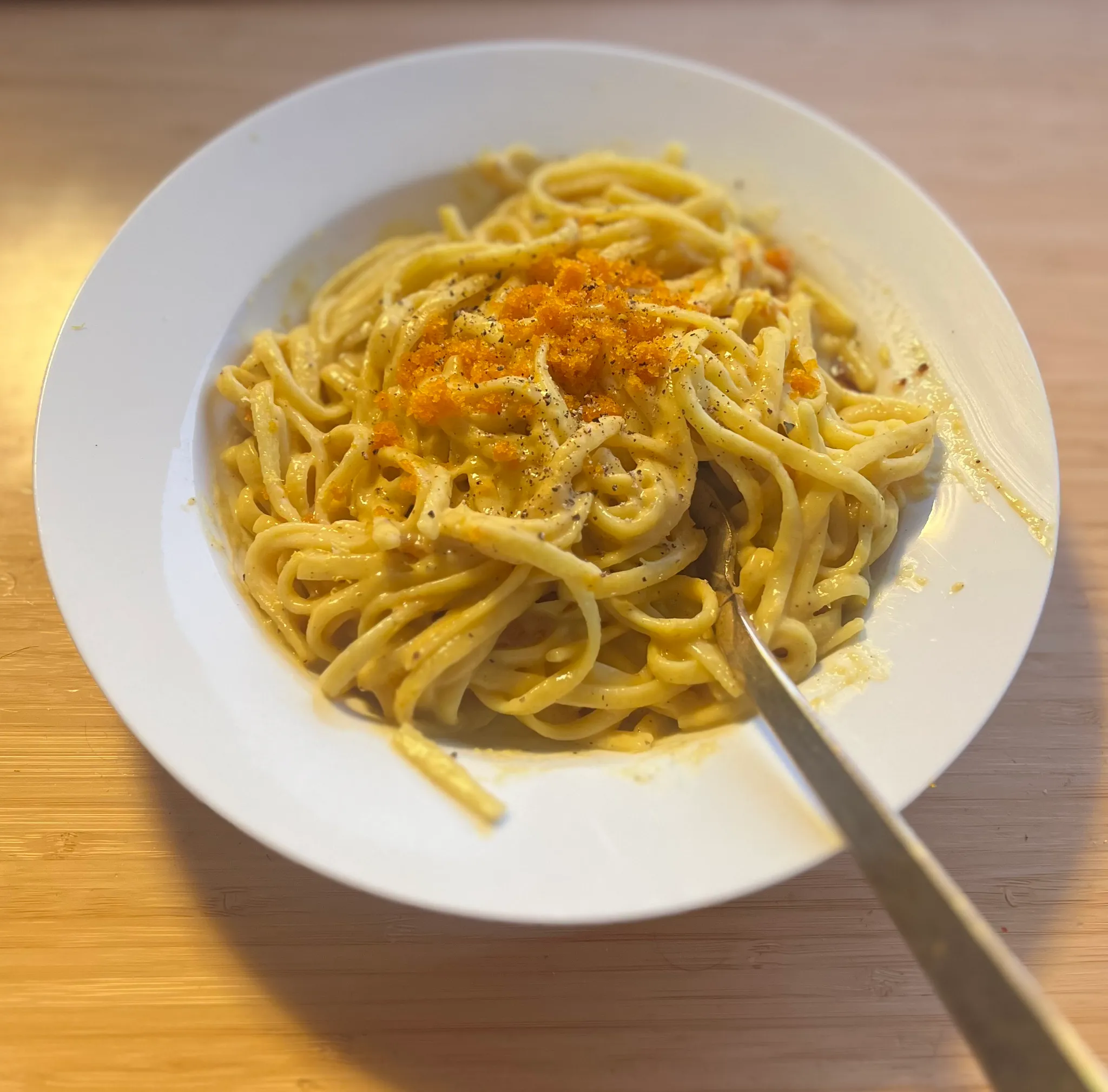
Spaghetti with Brown Butter, Lemon & Bottarga
by Leo
Spaghetti finished with burnt lemon for balance, not acidity. A refined Italian pasta dish showcasing browned butter, delicate bottarga, and crispy pangrattato.
Source: Website — Chef Italiano
Burnt Lemon
1.Char the lemon
Grate the zest from about one-quarter of the lemon and set it aside for the pangrattato. Cut the lemon in half crosswise. Heat a dry cast-iron or stainless steel pan over medium-high heat. Place the lemon halves cut-side down in the pan. Cook without moving them for , until they are deeply caramelized with patches of blackening. The aroma should be toasted and citrusy, not aggressively burnt. Allow the lemon to cool slightly before squeezing the juice through a fine sieve. Reserve approximately 10 g burnt lemon juice of the burnt lemon juice for the sauce, and set aside one charred half for garnishing.
Bottarga Preparation
1.Peel and grate
Remove any wax coating or natural membrane. Finely grate the bottarga: use 40 g for the sauce, 5 g for the pangrattato, and save the remaining 15 g for the final garnish. Refrigerate all of the prepared bottarga until needed.
Bottarga Pangrattato
1.Toast breadcrumbs
Heat 15 g of extra-virgin olive oil and 10 g of unsalted butter together over medium-low heat. Add 50 g coarse sourdough breadcrumbs and cook for , stirring constantly, until they are evenly golden and crisp. Remove the pan from the heat and let cool for about one minute. Then, mix in 5 g grated bottarga and reserved lemon zest. Transfer the mixture immediately to a plate to keep the breadcrumbs crisp. Taste before seasoning. The bottarga usually provides enough salt.
Sauce
1.Brown the butter
Place 110 g of 120 g unsalted butter in a saucepan and cook over medium heat until the milk solids turn deep golden brown and the butter develops a strong nutty aroma, which should take about . Immediately remove the pan from the heat. Add a lightly crushed 1 small garlic clove and let it infuse for before discarding it. Reserve about 80 g of the browned butter, including some of the toasted milk solids, for the sauce. Keep the rest for final adjustments.
2.Build the base
Place a wide sauté pan over low heat. Combine 25 g of extra-virgin olive oil, 50 g browned butter, 100 g pasta water, approximately 8 g burnt lemon juice, and half of the 2 g freshly ground black pepper. Whisk or swirl until a loose emulsion forms. The butter should remain emulsified with the water instead of frying separately.
Cook the Pasta
1.Boil and reserve
Bring a pot of water to a boil. Season with about 15 g fine sea salt. Since bottarga is naturally salty, the cooking water should taste lightly seasoned rather than overly salty. Cook the spaghetti until 3 minutes before al dente. Reserve at least 400g of pasta water before transferring the pasta directly into the sauce.
Assembly & Finishing
1.Finish cooking
Transfer the undercooked pasta directly into the sauce. Increase the heat to medium and continue cooking, tossing continuously. Whenever the sauce begins to thicken too much, add 30–40 g of pasta water. This constant motion releases the starch, which gradually binds the butter, oil, and water together to create a glossy emulsion.
2.Complete the emulsion
As the pasta nears al dente, reduce the heat to low. Add 15 g of remaining extra-virgin olive oil, 20–30 g reserved browned butter, and remaining 2 g freshly ground black pepper. Continue tossing until every strand is coated. Once fully cooked, turn off the heat and allow the pan to cool for . This brief pause is essential. The bottarga should be warmed by the pasta, not fried. Add 25 g grated bottarga, along with approximately 20 g warm pasta water. Toss vigorously until the bottarga completely disappears into the emulsion. Fold in the remaining 15 g grated bottarga and toss once more. Taste it. Only then decide if the sauce needs more burnt lemon juice, browned butter, or pasta water. The finished sauce should be glossy enough to flow gently between the pasta strands without leaving separated butter around the edge of the pan.
3.Plate and finish
Warm two shallow plates. Twirl the pasta into neat nests and spoon the remaining emulsion over them. Finish each portion with approximately 4 g shaved or grated bottarga, 1–2 teaspoons bottarga pangrattato, a light grating from the surface of the charred lemon, and freshly ground black pepper. Serve immediately. Resist the temptation to cover the pasta with too much bottarga or pangrattato. They are both intended to accent the sauce, not hide it.
4.Final Texture Target
The spaghetti should be fully coated in a glossy emulsion that clings to each strand of pasta without being heavy or greasy. The sauce should move with the pasta rather than pooling at the bottom of the plate. The brown butter should add richness without making the final texture too heavy for the bottarga and burnt lemon to stand out. The pasta should be al dente with enough surface starch to hold the emulsion. The pangrattato should be crisp and distinct, and the bottarga added at the end should sit on top of the pasta rather than disappear completely into the sauce. Properly finished, the dish should feel silky, not buttery, and concentrated, not dense.